Yin Yang in Vegetables
Organic, fresh vegetables are rare and precious. Their tastes, smells, and textures are incredible. This season, here in Portland, we’re lucky to have farmers’ markets scattered throughout the city. They offer cucumbers, cabbages, tomatoes, daikon radishes, spinach, to name a few.
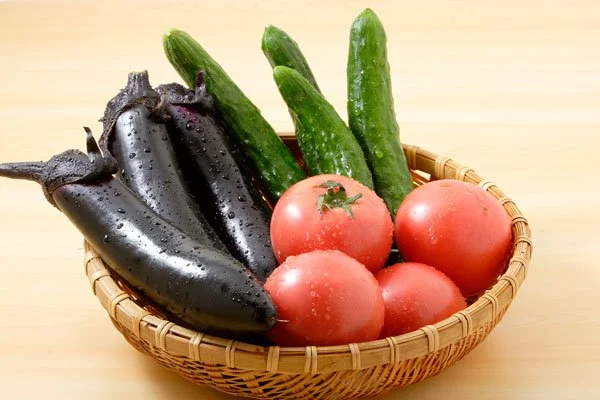
Vegetables can be categorized as Yin, Yang, or somewhere in between. Although many fall in the middle, a simple way to think about it is this: vegetables that grow in the summer tend to have Yin qualities, while those that grow in the winter tend to have Yang qualities. Examples of Yin vegetables include cucumbers, eggplants, tomatoes, and watermelons. Examples of Yang vegetables include squashes, carrots, and lotus roots. Some produce contains both Yin and Yang—for instance, the white part of a daikon radish is considered Yang, while the green part is Yin.
A vegetable that cools your body temperature is considered Yin, while a vegetable that warms your body temperature is considered Yang. In the hot summer, watermelon tastes refreshing and helps cool down the body when the sun raises your temperature. In the cold winter, a hearty soup made with squash, carrots, or onions tastes comforting and helps warm the body when the weather lowers your temperature.
Although we can enjoy most vegetables year‑round, those harvested from plants grown naturally in the soil often taste better than vegetables cultivated in artificial environments. Savoring seasonal produce not only enhances flavor but also supports the natural balance of Chi flowing through your body.